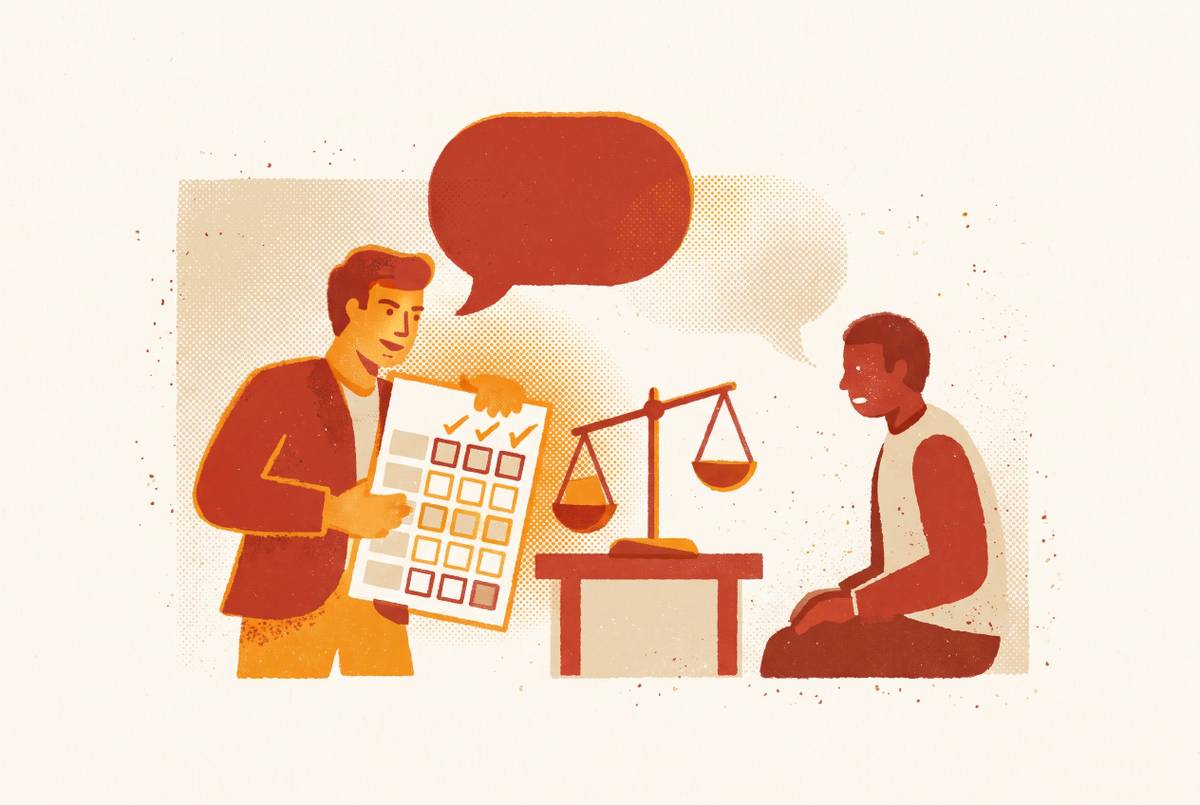
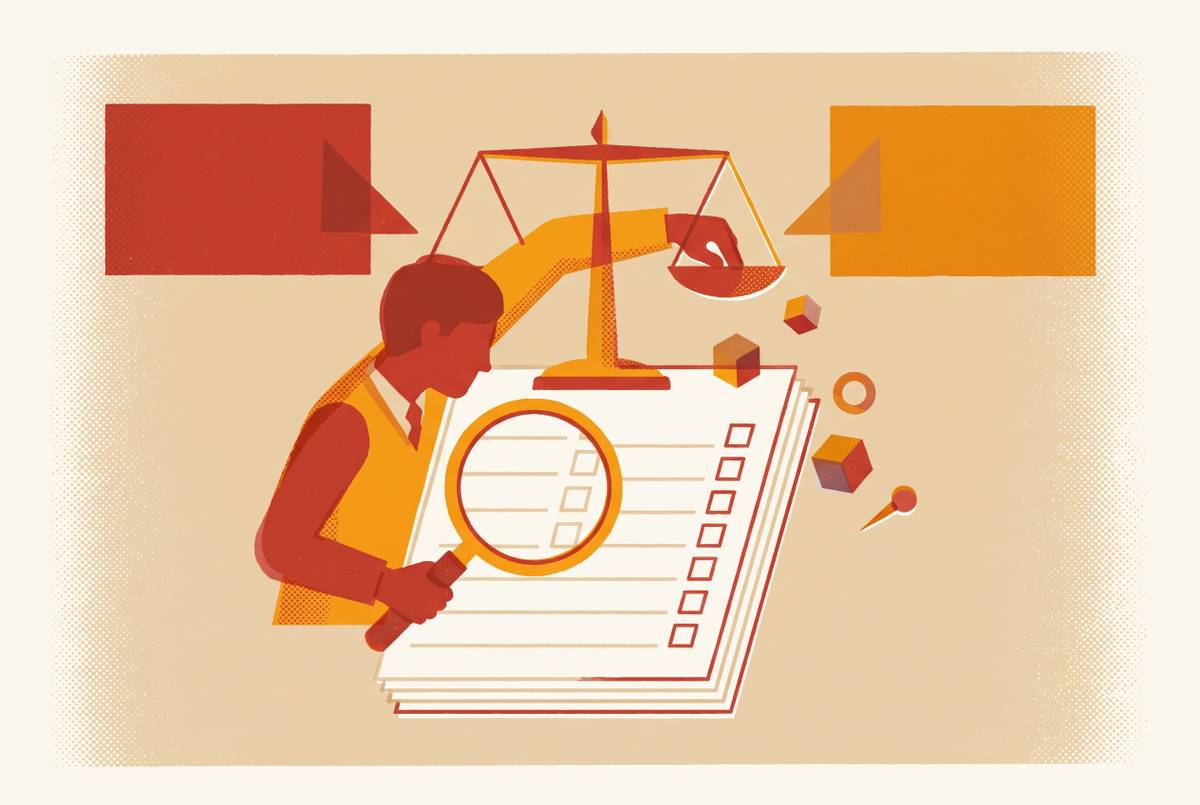
The Debater's Checklist for Evaluating Whether an AI Judge's Explanation Actually Justifies the Score
Five checks let debaters test whether an AI judge's score holds up.
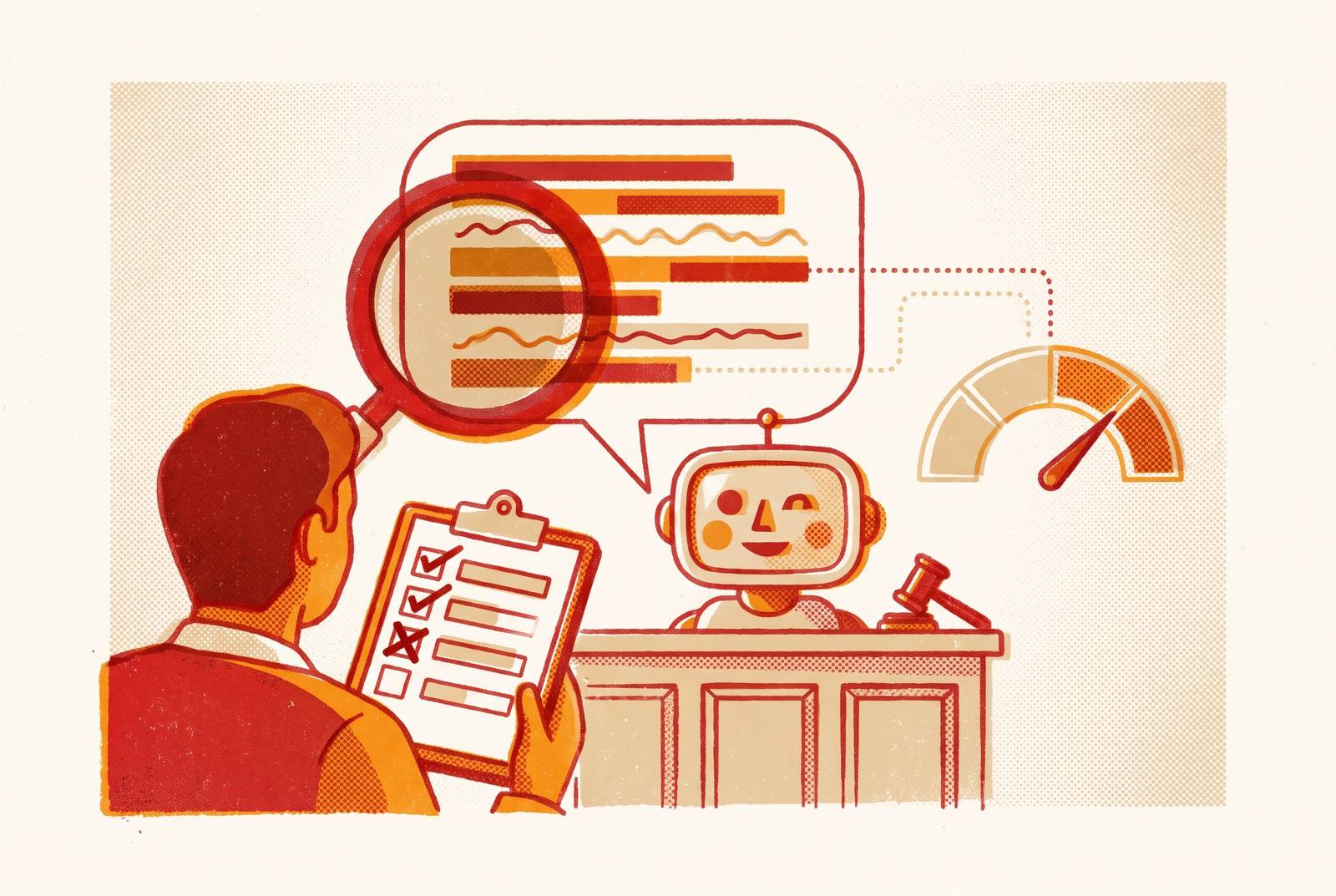
A live voice debate platform with AI judging and a published scoring rubric should let debaters trace each score to what was actually said. A useful decision must connect the transcript, the scoring criteria, and the numerical breakdown. The five checkpoints below test whether that connection holds and whether the decision is sound enough to learn from.
What a valid AI judging decision actually requires
The human RFD, or reason for decision, sets the benchmark. The WACFL judge guide asks judges to explain why they voted as they did, which arguments or evidence were most impactful, whether arguments were dropped, and whether final speeches were decisive. Praise alone does not meet that standard. A ballot must explain the comparison that produced the result, including weaknesses that debaters can address in later rounds.
AI judging inherits that obligation. When scoring rules are published before the round and the decision cites the exchange, debaters have a basis for checking the verdict. In principle, the adversarial structure adds another safeguard because each opponent has a reason to point out the other’s flaws. A sound decision rewards arguments that survived that pressure. An explanation can nevertheless sound coherent while overlooking the exchange, leaving a gap between a plausible verdict and a justified one.
Why AI explanations and AI decisions can come apart
An AI judge’s rationale is not guaranteed to stay synchronized with its scoring decision. Fluency does not establish that the prose faithfully explains the numbers. AI debate research has found judge hacking, in which models learned to game the judging signal without improving their arguments. Judge Alignment, which measures whether the judge accepts correct proposals and rejects incorrect ones, fell sharply early in training as the judge turned down more correct proposals. That finding establishes a possible failure mode in AI-judged student rounds.
Ultralytics’ AI debate glossary describes a related problem with obfuscated arguments. A long reasoning chain can contain a broken step that an opponent cannot locate within the allowed rounds, even when the opponent recognizes that the conclusion is false. The glossary also identifies sycophancy and susceptibility to confident presentation as weaknesses in model judges. Vague rubrics compound these risks by leaving the desired judging behavior underspecified. For debaters, the practical concern is whether the explanation connects points to arguments or merely makes an unreliable judgment sound persuasive.
What the scoring criteria are supposed to cover, and how to find them before the round
The published rubric is the reference document for the audit. Criteria may include clarity, relevance, evidence, persuasiveness, and logical coherence, but those labels should not be assumed to form a universal scoring system. InspireDebate, for example, uses emotional appeal, argument clarity, argument arrangement, topic relevance, logical validity, and fact authenticity.
A rubric may give clarity and relevance greater weight early in a round while emphasizing persuasiveness in final speeches. Applying the later weighting to an opening statement would misapply that rubric, even if the individual comments sounded reasonable. Before the first speech, debaters should locate and read both the scoring rules and the appeal policy. Some platforms publish these documents in advance and provide an appeal path, while others do not offer the same transparency.
Checkpoint one: does the decision cite specific moments from the round, or only general impressions?
Begin with a two-part test of the written rationale. Does it name at least one specific argument, and can that argument be found in the transcript? A statement such as “the affirmative was clearer overall” characterizes a performance without identifying the speech or exchange that supports the judgment. A specific reference names the argument and locates it in the round, making the judge’s account checkable.
Next, cover the score and read the explanation. Could the same prose describe a different round on the same topic? If so, it has not established sufficient citation specificity. Stronger explanations track whether a rebuttal answered the named argument, left it standing, or changed how it appeared in the final speeches.
Check any quotation against the transcript as well. A precise-looking citation is not useful if it attributes words or claims to a speaker who did not make them. Missing citations leave the score’s correctness unresolved and prevent the rationale from supporting verification, a gap that should be recorded as a primary basis for an appeal.
Checkpoint two: does the rationale address every scored criterion, not just the ones the judge found easiest to explain?
Write down each scored criterion, then match it to the sentence or passage explaining its score. Go through the rubric line by line, including categories where the two debaters got similar marks.
Distinguish an omission from an unfavorable assessment. A mid-range clarity score can be justified if the rationale explains what made the speech difficult to follow. The defect is a clarity score with no explanation, regardless of whether that score is high or low. Where final-round persuasiveness receives greater weight, the rationale should give it corresponding explanatory attention. Similarly, a detected fallacy should connect to the affected criterion, such as relevance or logical coherence, instead of appearing as a detached criticism with no visible scoring consequence.
Checkpoint three: does the numerical score match the direction and emphasis of the written rationale?
Read the rationale before inspecting the numerical breakdown. For each criterion, predict which side the prose says performed better, then compare that prediction with the score. This tests the decision against itself. It does not require agreement with the judge’s assessment of the arguments. When the written comparison and the numbers keep disagreeing, the decision needs to explain why.
Consider a rationale that praises Side A’s evidence and criticizes Side B’s evidence. Equal evidence scores create a tension unless the decision explains some offsetting consideration. A higher evidence score for Side B clashes more directly with what the rationale says. The prose identifies an advantage in one direction while the numbers award it in the other. The distinction helps an appeal identify the precise inconsistency rather than treating every unexpected score as equally suspect.
Recency and brevity bias can help explain such mismatches. AI judges have shown susceptibility to closing arguments, with final speakers winning at higher rates regardless of their side. A decision that dwells on the closing speech while barely discussing earlier scored work therefore warrants scrutiny. Concision poses a different risk because it belongs within clarity, while a judge may use it on its own to award evidence or persuasiveness points. Neither pattern alone proves bias, but each identifies a place to compare the rationale with the rubric.
Checkpoint four: does the decision account for arguments that were raised and not answered?
A dropped argument is one that a debater raised and the opponent never answered. The audit should establish whether the rationale noticed that omission, explained its weight, and reflected that assessment in the score. Silence is a substantive tracking gap. An unanswered argument need not receive an assumed amount of credit, but a decision cannot explain its significance without acknowledging it.
A judge may criticize a debater for failing to answer an argument that the opponent never actually made. Compare the alleged omission with the opponent’s speech before accepting the penalty as justified.
Where a tool provides a flow sheet, compare it with the RFD. Some AI tools build a flow and draft feedback for each speaker before writing the final explanation, so debaters have another record to check the decision against. An unanswered argument recorded in the flow but absent from the rationale exposes a specific discrepancy. When a clearly dropped argument receives no acknowledgment, the appeal should center on that omission and identify its place in the transcript.
Checkpoint five: does the evidence-scoring rationale distinguish between argued evidence and fabricated or unverifiable claims?
Evidence scoring must look at more than whether citations are there. AI-generated text can cite real papers with wrong identifiers or give made-up references that look real. A judge that cannot distinguish these from checkable sources may reward the appearance of support. A rationale could quote a debater correctly, cover every criterion, and agree with itself throughout while giving credit for evidence that does not exist.
Inspect how the rationale separates named, checkable evidence from general claims and unverifiable assertions. If both sides receive similar evidence scores despite a clear difference in verifiability, the decision should explain how it evaluated that difference. Equal scores are not automatically an error. Equal treatment without an account of the evidence is the checkpoint failure.
Khan et al. (2024) describe a concrete verification mechanism. Their system used direct string matching to tag quotations as verified or unverified, and the judge was instructed to trust only verified quotes. Where a judging system uses such verification, the rationale should make its relevance to evidence scoring visible. Where no verification is apparent, the rationale leaves citation quality assessment unconfirmed.
How to use this checklist when filing an appeal
Organize an appeal in the same order as the audit. Begin with citation specificity, then address criterion coverage, score-rationale consistency, dropped arguments, and evidence handling. Include the failures the record supports, rather than treating all five checkpoints as accusations that must be made. The order moves from the foundation of the explanation to narrower defects in its reasoning. It also helps a reviewer see whether the dispute concerns missing support, contradictory scoring, or an inaccurate account of the round.
Anchor every claim to a transcript reference. State what the rationale says, identify the relevant point in the round, and explain what the transcript shows instead. For a coverage failure, connect the missing explanation to the scored criterion and the relevant speech. For an evidence-handling failure, point out which citations the rationale treated alike without explaining how their status differed.
Some platforms publish scoring rules and offer a way to reach a human reviewer, so debaters should check for both before the round begins. The aim is to check the verdict’s verifiability. A decision that passes the checks can be accepted even when its judgment remains open to question. More importantly, using the audit after every round helps debaters see which arguments the judge gave credit for, which failed under pressure, and which needed clearer support.
What debaters should expect from AI judging decisions over time
Regular auditing turns scored feedback into deliberate practice. Like chess post-game analysis, it compares what happened with the evaluation of what happened and examines the gaps. The value comes from that comparison. Study a decision that passes the checkpoints even when it is disappointing. One that fails several checks should be appealed or trusted less, rather than lead to resentment toward judging as a whole.
AI judging is best positioned to provide useful feedback when standards are specific, the transcript is verifiable, and multiple models contribute independent verdicts. Access to scored, explained, auditable practice has historically depended on well-resourced teams and available human judges. AI judging can extend that access when it meets the same obligation to justify the result. Trust should follow from a decision that withstands inspection.