Appealing an AI Debate Verdict to a Human Reviewer
A strong appeal pits the verdict's own words against the transcript.

Appealing an AI debate verdict to a human reviewer is a way to test whether automated judging follows the record and the published scoring rubric. For practitioners evaluating a live voice debate platform with AI judging, that reviewability is a meaningful safeguard. A strong appeal identifies a specific conflict between the written decision, what was actually said, and the scoring rules, then asks for a defined correction.
Why AI verdicts need a human check built into the system
Adversarial debate gives each speaker a reason to expose the other side’s false claims, unsupported evidence, and logical gaps. That pressure helps a judge weigh both sides instead of accepting one answer that no one has challenged. It is a useful corrective, but not a guarantee. A judging model can make the same mistake each time, and those errors can be hard to spot from just one round. Speed and consistency do not establish that the model is correctly calibrated.
Research on AI debate identifies a particular weakness in this arrangement. An argument can contain a wrong step that is hard to locate, leaving the honest debater unable to demonstrate exactly where the reasoning fails. Knowing that a conclusion is false is not enough. In debates between models, shared misconceptions create a further problem because neither side may challenge a flawed premise. The judge then receives an adversarial exchange without the correction that the structure was supposed to produce.
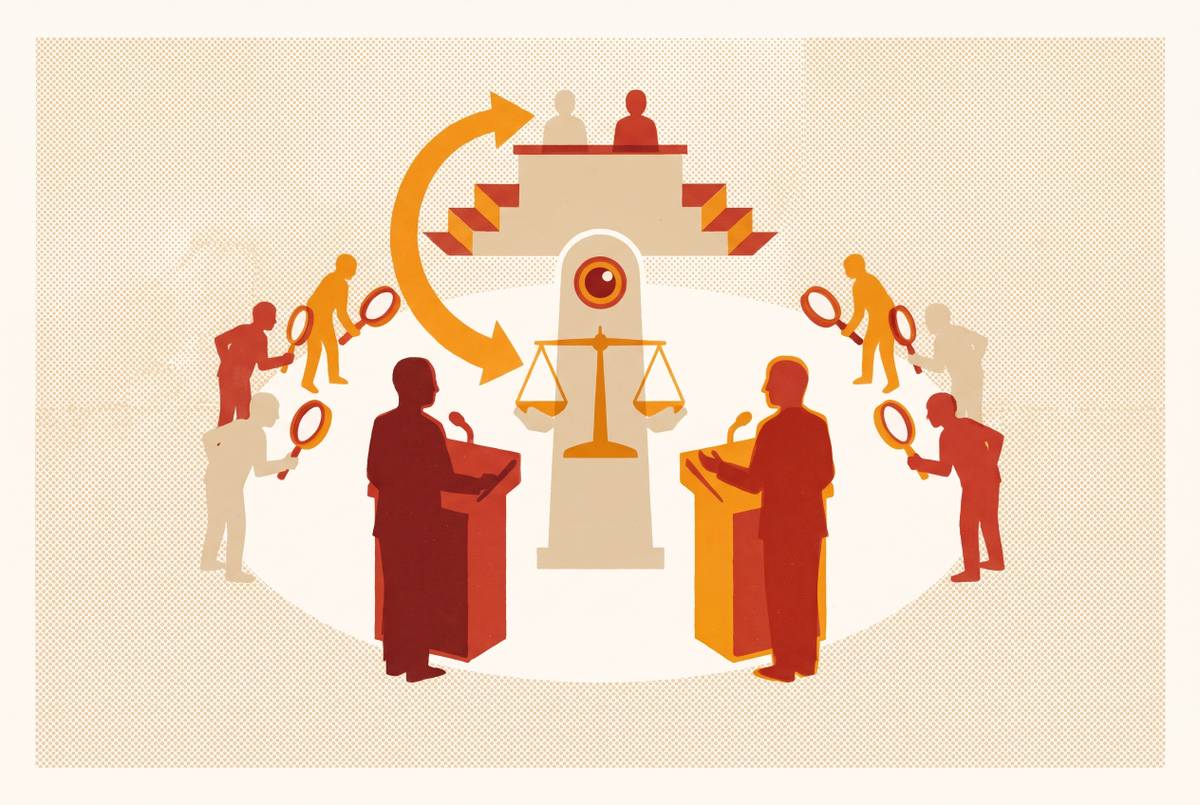
Independent human review lets someone other than the model check a disputed decision. The model that made the call does not review its own ruling, so the appeal does not depend on that model recognizing its original mistake. This is a deliberate separation of responsibilities. An appeal mechanism is therefore evidence of a well-designed judging system.
What AI judges get systematically wrong — the documented failure modes
Recency bias can favor the last speaker even when their argument is no better. Large language models evaluating sequential arguments can place disproportionate weight on closing statements, even when earlier exchanges contain the stronger reasoning. The timing of an argument can distort its reception. For a debater reading a verdict, the diagnostic question is whether the decision explains why the closing argument prevailed over the responses already in the record.
Length preferences can also interfere with the assessment. Some AI judges favor concise responses, which can disadvantage a speaker who needs more space to develop a case thoroughly. The direction of this bias varies by model. Other judges favor longer responses, so brevity alone is not a reliable explanation for an unfavorable result. The relevant distinction is between rewarding the quality of an argument and rewarding its length.
Fluent, assertive language can receive more credit than logically sound reasoning delivered plainly. The “back-stab” pattern exploits a related vulnerability by beginning with apparent agreement or concession, then pivoting to a sharp closing attack. The concern is that emotive language can displace the logical record as the basis of the decision.
These patterns help name what to look for in verdicts, but they do not prove that a given verdict is wrong. A strong closing argument may be good enough to decide the round, and concise reasoning may truly be better. The record must distinguish quality from preference. Understanding the failure modes helps debaters identify what to examine before deciding whether an appeal has a defensible basis.
What actually qualifies as grounds for appeal
The practical threshold is a conflict between the decision and what was actually said. Believing that one side argued better does not establish that conflict. The written verdict must make a claim that can be tested against the transcript or the published rubric. This anchors the appeal in evidence rather than dissatisfaction with the outcome. It also gives the reviewer a question that can be resolved.
A decision may cite a point that nobody made, assign a claim to the wrong speaker, or treat an unanswered rebuttal as though it received a response. It may also penalize an argument for a fallacy that does not apply to the reasoning in the transcript. Each discrepancy has an identifiable location in the record. The appeal asks the reviewer to compare the judge’s account with the exchange itself.
A suspected bias becomes appealable through the same test. For example, a verdict may treat a closing claim as decisive without accounting for earlier rebuttals that undercut it. Naming recency bias is not enough on its own. The appellant must show which earlier response the reasoning fails to account for and why that omission weakens the stated basis for the decision.
The published rubric is another standard against which to check the decision. If it weights logic and response quality, an explanation focused almost entirely on rhetorical style while ignoring an unaddressed counterargument presents a checkable discrepancy. A preference for a different judging philosophy does not. Publishing the rules before the round makes this distinction possible because the appeal concerns the application of an established standard.
What the human reviewer is actually doing when they read an appeal
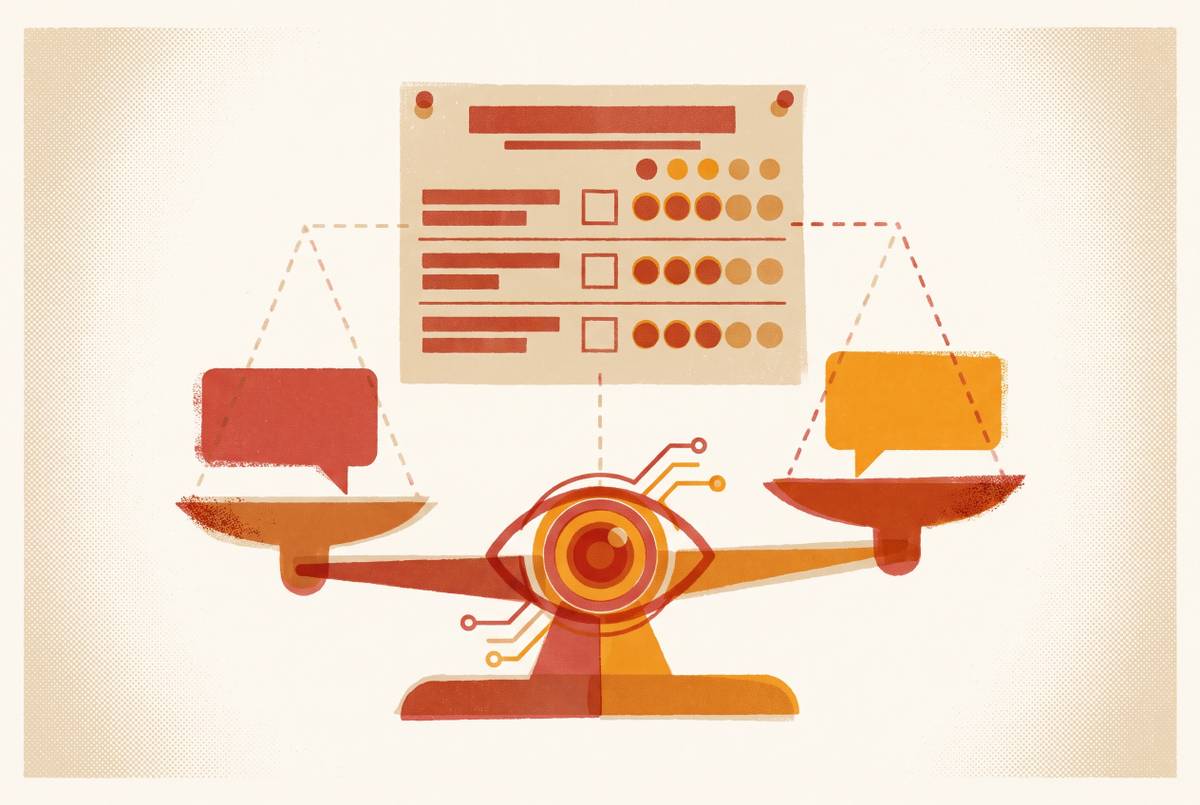
The human reviewer audits the decision. The reviewer checks the AI judge’s written reasoning against the transcript and the published scoring criteria. That is narrower than choosing the more persuasive speaker. An appeal therefore needs to challenge the support for a specific decision.
The reviewer reads the transcript, the written decision, the scoring breakdown, and then the appeal. The reviewer looks for the point at which the decision’s reasoning detaches from the evidence it cites. A well-framed appeal makes that point easy to locate without requiring the reviewer to reconstruct the appellant’s case from scattered complaints.
Humans Correct Their Judgments Through Debate, but Weaker AI Models Do Not found that debate helped human judges correct mistaken beliefs while weaker AI judges did not reliably do so. The finding supports a distinct role for human judgment in cases of AI miscalibration. It does not make the reviewer’s task unrestricted. The governing question remains whether the disputed decision holds up against the record.
This distinction also explains the value of restraint. A reviewer who already has the transcript does not need the appeal to reproduce the entire debate. The useful contribution is the relationship between a decision claim, the evidence that challenges it, and the criterion affected. Precision reduces the work of finding the alleged error while leaving the reviewer free to assess it.
How to build an appeal the reviewer can act on
To write for that task, begin with the decision’s own language. Quote the sentence being disputed and place it next to the transcript excerpt that contradicts it. Explain that gap plainly, without starting with a broad claim that the judging was unfair or that the opponent did poorly.
Then identify the scoring criterion affected by the discrepancy. If the rubric defines response quality in terms of directly addressing the opponent’s main point, quote that definition and show which response the decision credited. This connects the factual error to the scoring rule. Without that link, the reviewer may see what the decision got wrong but miss why the appellant thinks the score needs to change.
Consider a hypothetical round in which one speaker challenges a premise that the opposing conclusion depends on. The closing speaker repeats the conclusion but does not answer that challenge. Suppose the written verdict nevertheless credits the closing speech with answering it. An appeal would put the verdict sentence next to the earlier challenge and the part of the closing speech that repeats the conclusion. It would then explain that repeating the conclusion did not answer the objection to its premise, using the published response-quality criterion to establish why the distinction affects the score.
The requested correction should follow from that evidence. In this example, the appellant could request a rescore on response quality rather than demand reconsideration of every criterion. If the demonstrated error supports overturning the verdict, that can be the requested remedy instead. The request should identify what the reviewer is being asked to change. It should not leave the remedy implicit.
When the objection concerns bias, use the same evidence-based construction. Show where the decision gives the closing speech disproportionate weight despite earlier rebuttals, or where style descriptors stand in for an assessment of logical coherence. Keep the appeal short enough that those comparisons are easy to see.
What to do before filing — the checks that save a weak appeal
There should be a specific sentence in the decision and a specific passage in the transcript that establish the conflict. If those passages cannot be identified, the appeal is not ready. A general sense that the verdict favored confidence or closing position may justify closer reading, but it does not yet provide evidence the reviewer can act on.
Re-read the rubric as published before the round. Check that the criterion being challenged is the one the decision actually applied. A disagreement about its definition is not a misapplication. The appeal must show how the judge departed from the stated rule, even if the debater would prefer a different rule for future rounds.
Next, check whether the written decision already addresses the objection. An omitted argument and a mischaracterized argument are not equally clear evidence of error. Both may support an appeal, but an explicit mischaracterization is easier to demonstrate because the judge has made a claim that the transcript can contradict. An omission requires a more careful account of why the missing argument undermines the reasoning actually given. Its strength does not follow merely from the appellant considering it important.
Finally, consider whether correcting the error would change the scoring outcome. A narrow correction that leaves the result intact is worth pursuing only if the correction is important for the record. This check keeps the requested remedy proportionate to the evidence. A focused, well-prepared appeal is more likely to succeed and be taken seriously than a long, emotional one.
How the appeal process fits into a broader practice of getting better
Reading a verdict closely enough to challenge it uses the same skill as reading it closely enough to learn from it. Both require tracking the gap between what was argued and how it was received. That gap needs a close look whether the verdict stands or changes. Practiced debaters use AI-judged rounds to build arguments and find weaknesses, and human review lets them do the same when the feedback itself may be wrong.
An overturned verdict identifies a judging error that the debater can watch for in future rounds. A verdict that survives review directs attention back to the argument and the evidence that failed to establish the claimed discrepancy. The next preparation task is therefore more specific. Rather than treating the outcome as an unexplained judgment of overall ability, the debater can examine the reasoning or response that did not support the intended assessment.
The discipline also transfers to cross-examination. Locating the exact point where reasoning separates from evidence is more useful than simply restating a preferred conclusion. An appeal applies that discipline to the judge’s account of the round. Cross-examination applies it to the opponent’s argument, but both depend on identifying a gap that another reader or listener can recognize.
Live, spoken debate against real opponents differs from discussion or written argument because the exchange is judged and produces feedback that can be examined. Published scoring rules, citable decisions, and human review make that feedback contestable. For practitioners and students using automated judging, this is the practical value of a reviewable scoring record.