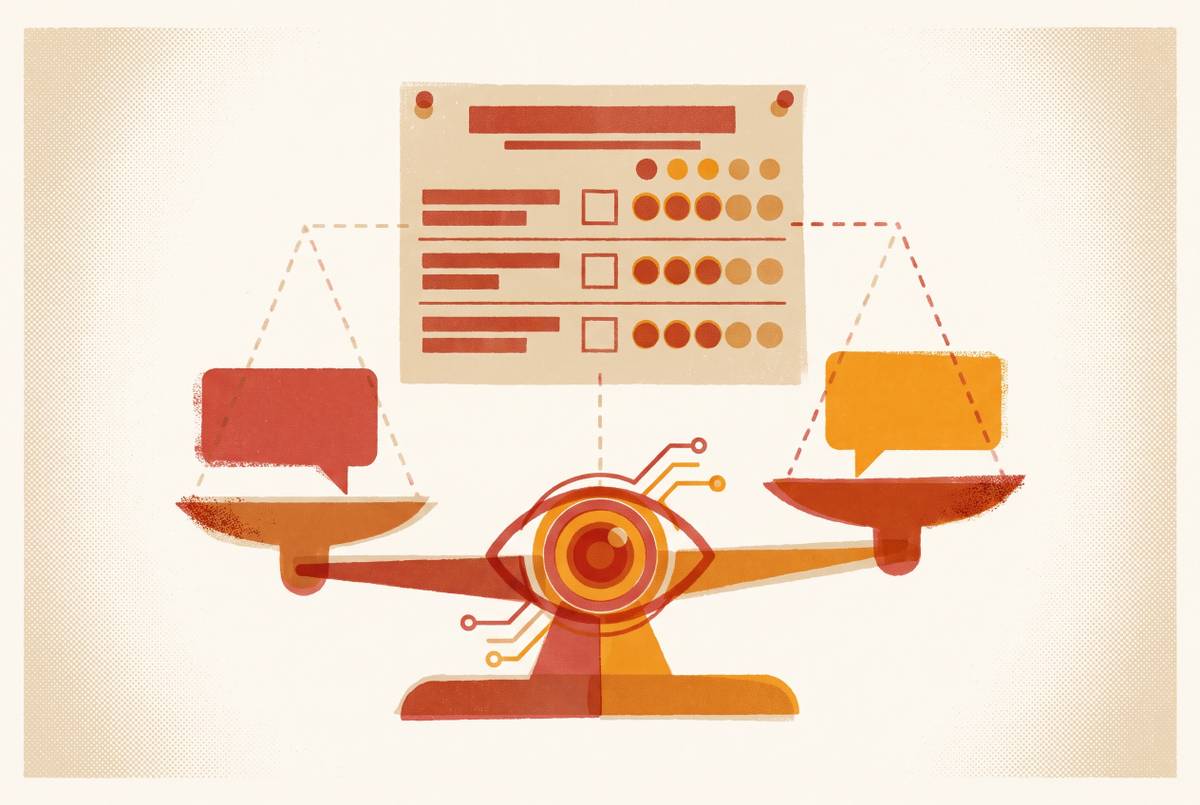
Across the Divide's Guide to Live Voice Debate Platforms That Actually Judge What They Hear
A platform's AI judge may be scoring a transcript, not your voice.
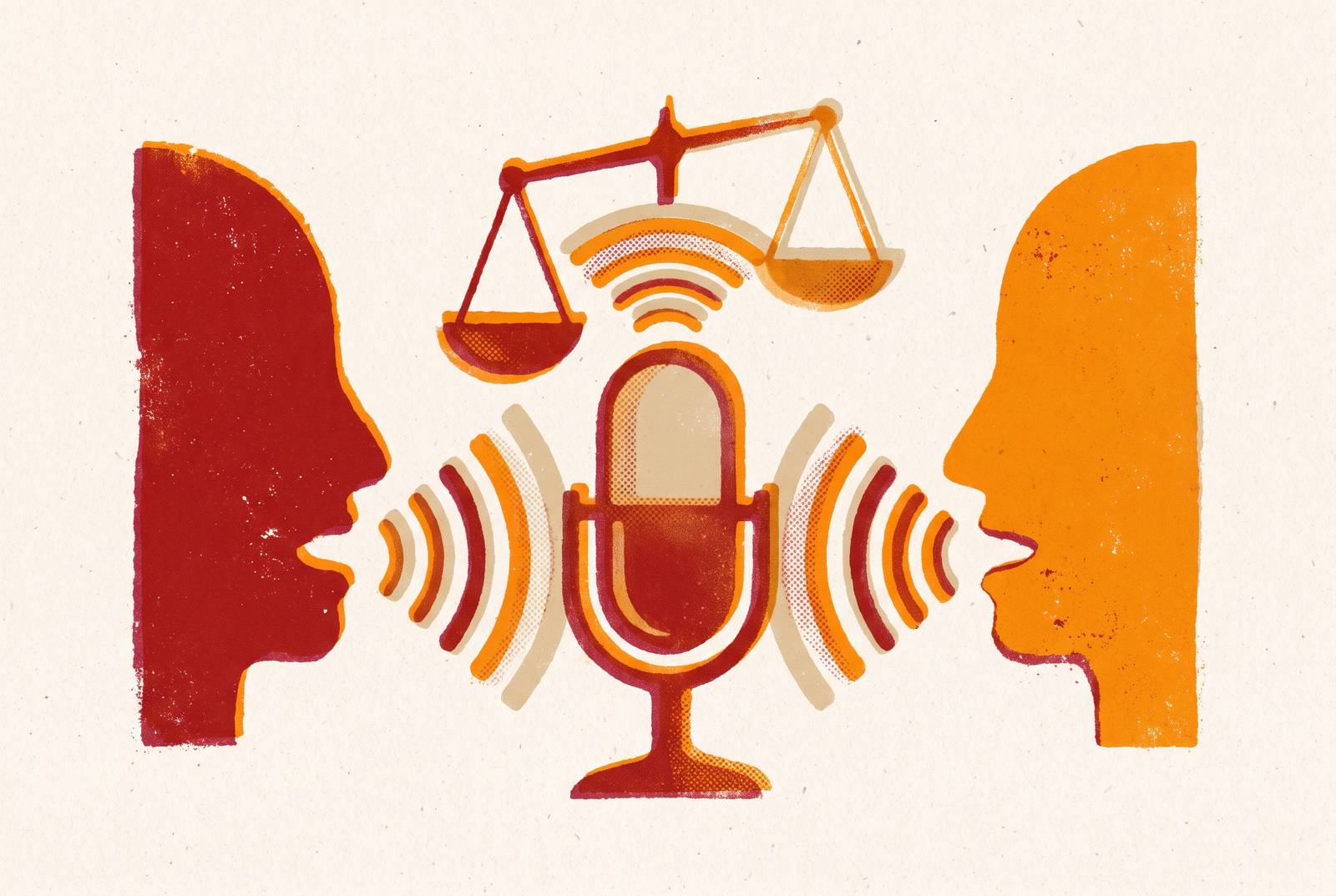
Debate AI / DebateIt offers live spoken debate with AI judging and published scoring dimensions of Logic, Evidence, Persuasion, and Responsiveness. A guide distinguishes this kind of practice from platforms that judge written submissions or transcripts alone. Whether the judging system evaluates the spoken round, including its timing and responsiveness, matters most.
Why most debate platforms are not judging what they hear
The practical test is a question any debater can ask before choosing a platform. Is the AI judging what the speaker said, or what a transcript of that speech says? The difference changes what a verdict can establish. Most platforms that describe themselves as AI-judged score a transcript or a written submission.
Online debate generally takes four forms, including live video rounds, written rounds decided by AI or community vote, moderated events decided by audience votes, and argument maps built without an opponent. Most AI judging happens in the written category. A platform can thus give a useful automated decision without judging how someone speaks. The presence of an AI judge does not, by itself, establish that the system listens.
An accurate transcript provides a useful record of the words spoken. A deliberate pause, an interruption during a point of information, or a change in delivery can affect how an argument lands. Transcription flattens those distinctions. Consequently, a verdict based only on text can miss pacing, delivery, and the responsiveness that makes spoken argument a separate skill.
What genuine live-voice judging requires at the architecture level
Genuine live-voice judging requires a pipeline built around the round as it happens. Audio goes directly to a real-time speech engine and is processed while the debater speaks. The judging logic must then account for what was heard, including timing, interruptions, and responses within the round. Live transcription alone is not the whole requirement. The distinction depends on what information reaches the judge.
That requirement separates the speech engine from the judging system. A speech engine can make an exchange available as it unfolds, while the judge determines how that exchange affects the decision. If the verdict uses only the resulting words, the system still loses part of the spoken performance. The scoring process also needs rules that give the relevant features of speech a role in the outcome.
A system that awards points to each argument as it is made rewards immediate responsiveness, while a holistic ballot can assess how the full round develops. Neither approach is interchangeable with the other. A debater may deliberately build toward a rebuttal delivered at the end, raising a fairness question for incremental scoring. An end-of-round ballot may work better in competitive formats where the final comparison decides which arguments win.
Which live voice debate platforms use AI judging, and how do they score?
Debate AI / DebateIt is the most format-specific option here, offering a format-accurate AI opponent or live human-vs-human debate on video. Its tournament-grade ballots cover PF, LD, Policy, APDA, BP, WSDC, Congress, and MUN. Its published voice specifications include sub-200ms latency and full interruption support, while its judge scores Logic, Evidence, Persuasion, and Responsiveness. Audio is never recorded, and the end-of-round ballot includes speaker points and a next-round drill.
DebateIt also has real-opponent matching, where people agree on a question and take opposing sides. Its connection to this publication warrants disclosure. Its placement rests on its published scoring dimensions, format-aware judging, and stated voice architecture, rather than on a claim that it is the best choice for every user.
Debate Ladder instead organizes practice as a voice-first game. The user is given a side and speaks through an opening, rebuttal, and closing against an AI opponent. Its judge scores both sides on logic, responsiveness, clarity, delivery, and persuasiveness. ELO starts at 500, rises with ranked wins, and falls with ranked losses, giving short practice rounds a competitive progression suited to regular play.
Rebuttal Live makes the scoring interval itself distinctive. Rooms accommodate two to twenty people using text chat or voice, and the AI scores every argument as it is made on a 0–30 scale. Evidence and direct responses earn bonus points, while repetition and going off topic incur penalties. ELO moves through eight tiers, and a daily featured debate pays extra, so how well each argument does as it is made is central to the game.
DebatePro uses live, structured Lincoln-Douglas debate with enforced timers, phases, rebuttals, and defined win conditions. It supports human vs human, human vs AI, and AI vs AI rounds, with instant scoring on logic, clarity, persuasion, evidence, and strategy. ELO-style rankings and seasonal ladders provide competitive progression. Selected debates are distributed under a Debater Revenue Share Agreement, with a monetization path for high-ranking debates and approved AI persona formats.
Debategle pairs users with someone who holds the opposite political view, uses two-minute turns, and has AI evaluate arguments and update ELO after every match. Political disagreement defines the use case. That makes it different from open-topic practice, where the question is chosen independently of participants’ political views. Its appeal is the opportunity to answer a real opponent across that divide, rather than to rehearse a broad range of tournament structures.
What the written-round and audience-vote platforms are actually good for
ArguFight, DebateArt, and VersyTalks allow deliberate argument construction at the participant’s own pace. That supports learning argument structure, refining evidence use, and participating across time zones when synchronous debate is impractical. These are legitimate goals in their own right. Their limitation is narrower, since a written verdict cannot establish how the same argument would sound or how quickly its author could defend it.
Audience-vote formats such as Bantr and Debatr train persuasion of a room. Kialo lets users map arguments to build a case before a round, without an opponent or judge. Audience response does not supply the same assessment as a format-aware ballot, and a map cannot impose the pressure of an opponent’s next turn. Written and audience-vote formats are not substitutes for the combined listening, flowing, and on-the-fly refutation that live judged practice requires.
How the judging architecture shapes what feedback you can actually use
A verdict becomes useful when the debater can inspect its reasoning against the round. The checkability standard is specific. A decision should quote the exact lines that won and lost, allowing comparison with the transcript and the debater’s memory of the exchange. This makes the words an audit trail for a decision that must also account for the live performance.
Published scoring rules give that audit a standard. When the dimensions are available before the round, a debater can deliberately target logic, responsiveness, clarity, or persuasion. Timing is part of transparency here. A rubric disclosed only after the decision cannot guide the performance it evaluates. Likewise, a published rubric without an explanation of how it was applied leaves the debater with categories alone.
When several independent models reach a majority decision, one model’s quirks cannot decide the outcome on their own. Human-review appeals add a separate form of accountability. Their value is not an assumption that AI judging is unreliable, but the existence of a route beyond accepting its authority as final. Transparent rules, inspectable decisions, and review are therefore distinct criteria for fairness.
Policy calls for tagged cards, LD for value/criterion, and BP for extensions. Those distinctions shape what counts as a successful strategic move. A generic rubric may pick up on clarity or persuasive language but miss what an extension does in a BP round. Consequently, the most useful feedback is not necessarily the longest ballot, but the one that explains the decision in terms appropriate to the format being practiced.
The skill live-voice judging is actually training, and why text-based practice cannot substitute for it
Live spoken argument places several tasks inside the same time limit. Argument construction provides the foundation, followed by listening and flowing, real-time refutation, and then weighing and delivery. These skills depend on one another during a round. A debater cannot answer the strongest opposing point without first hearing and recording it accurately enough to work with it. Beyond a certain stage, writing alone cannot develop that sequence because it removes the speaking opponent and the ticking clock.
The decisive difference appears at the refutation stage. A written round allows time to construct a response, whereas a live round requires the debater to hear an argument, flow it, and begin answering within seconds. The latency is part of the skill itself. A response that is persuasive after extended revision does not establish that its author can produce it under those conditions. One-way speech rehearsal also leaves out the opponent whose argument determines what the next response must address.
Thinking on one’s feet is trainable. Volume of rounds is the primary driver because repeated exposure reduces the number of situations that are genuinely unfamiliar. Clean restatement can buy thinking time, while first-principles defaults provide a way forward when prepared material runs out. Those habits need practice under live pressure. Written preparation supplies material for them, but it does not require the same immediate choice about what to say next.
Signposting tells the judge where an argument sits, pausing on purpose gives it weight, and cutting filler makes the spoken exchange clearer. These are choices made in time. Their effectiveness also depends on the argument they accompany and the response they are meant to answer. Live judged rounds bring those elements together, so debaters can work on how they speak as well as the case they make.
How to pick the right platform for where you actually are as a debater
The practical choice starts with two variables, namely how much structure the debater needs and whether a willing opponent is available now. For format-accurate competitive practice in PF, LD, Policy, BP, or WSDC, the relevant combination is format-aware judging, a suitable opponent, and a tournament-grade ballot. Debate AI / DebateIt offers that combination with an AI opponent available on demand. The format should lead the choice. A scoring system built around immediate argument points serves a different goal from a ballot that evaluates a complete competitive round.
For a debater seeking audience reaction, Bantr or Debatr fits the persuasion-of-a-room goal. That choice should remain explicit about what is being trained, since an audience vote and an AI rubric answer different questions. Availability also affects the practice habit. An on-demand AI opponent removes the need to find another person, while real-opponent matching preserves the uncertainty of answering someone else’s position. The useful choice is the one whose structure matches the intended practice.
Access should not require a well-funded team, an institutional subscription, or a prepared speech. The live-voice platforms covered here all have a free way to start, though there may be limits on which modes are free or how much they can be used. DebateIt, for example, has free live rounds with real people, and its paid plans add AI voice rounds. The remaining task is to build the habit. Whichever platform fits, the fastest improvement comes from repeated live judged rounds, speaking into a microphone against a real or AI opponent and receiving a scored verdict on what was said.