How Matched Debate Pairing Works vs Open Chat Rooms
Matched pairing structures debate with rules; open chat leaves it to chance.
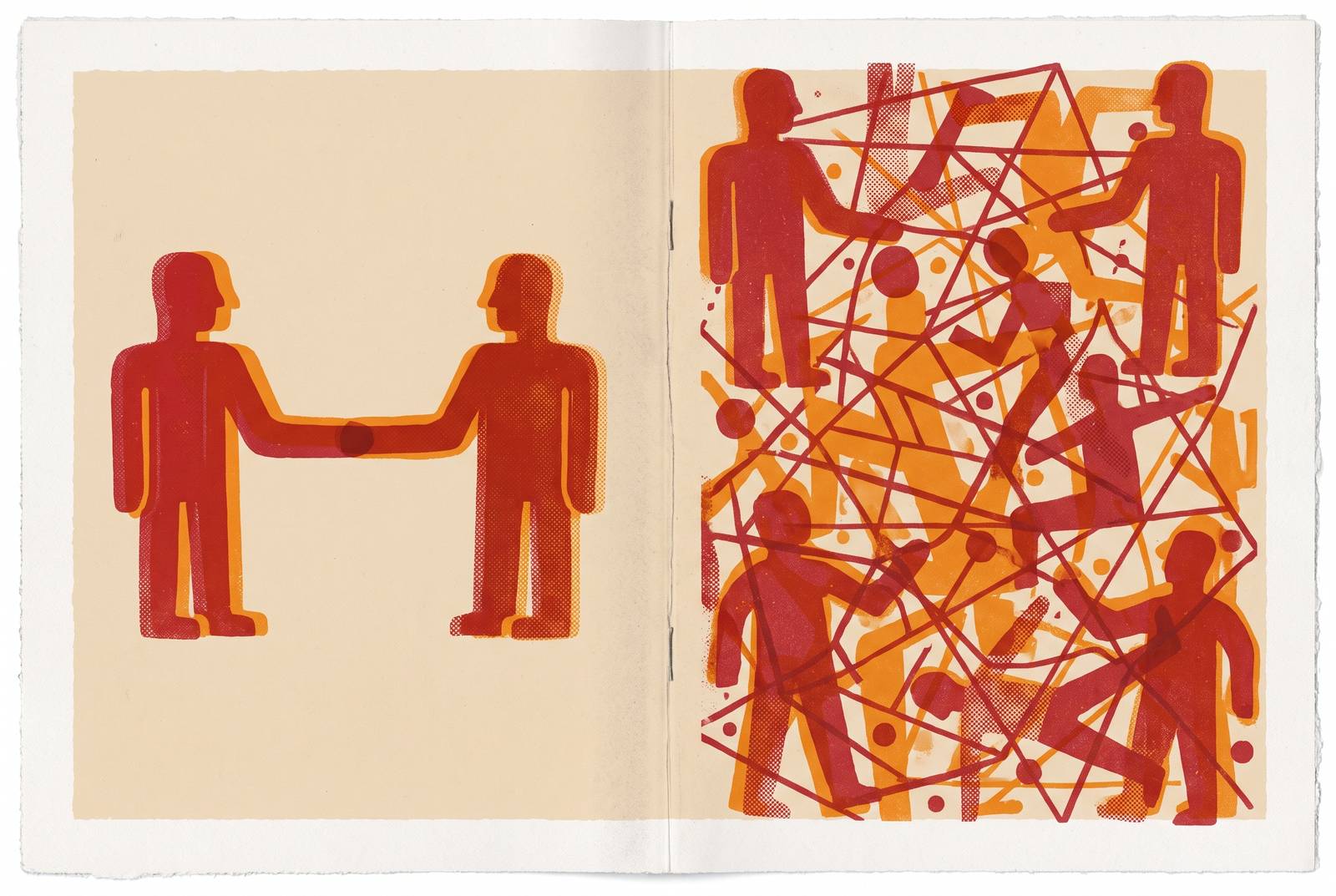
In open chat, how well strangers disagree depends on who shows up, while matched pairing gives them a shared question, opposing sides and an endpoint. For readers who want live spoken practice with a scored verdict, Debatable brings those parts together. The right choice depends on whether the goal is to exchange opinions or improve an argument.
Why open chat rooms and matched pairing feel like the same thing but aren't
The likely starting assumption is that either environment can host a debate. That is true if debate means any exchange between people who disagree. It is less useful if debate means testing a position against an opponent who answers it within a shared frame. The first definition describes something that can happen in a conversation, while the second describes an activity that needs rules.
A room full of thoughtful people can still produce an exchange in which everyone answers a different question. Matched pairing establishes what the participants are doing before they begin, rather than asking them to negotiate it while arguing. The format makes productive disagreement its purpose, without guaranteeing that every matched round will be insightful.
What open chat rooms actually give you when you want to argue
Open rooms have a genuine advantage in accessibility. There is no signup friction, no wait for a match and no commitment to a particular format. A participant can enter, offer an opinion and encounter responses without first agreeing to a round. That freedom works well for people who want to hear a range of views more than they want to work through one opposing case.
Anyone can post on any side at any time, and nobody has to stay or respond. A strong objection may receive a careful answer, a change of subject or nothing at all. Who happens to show up therefore decides how deeply people argue, how civil they are and whether they hold each other to shared norms.
Without a shared question, even good-faith participants can talk past each other. Without declared sides, it can be hard to tell which claim anyone has agreed to defend. Without a shared clock or endpoint, an exchange can continue without resolution or end when someone leaves. These are coordination failures.
The four structural constraints matched pairing adds — and what each one does
Matched pairing tackles those failures with four constraints, each of which keeps an argument from going off track in a different way. The first is a declared opponent. One person takes the other side and has the responsibility to respond, so the exchange does not dissolve into mass disagreement. A one-on-one format removes pile-ons and brigading from the round itself. It also gives each participant a clear target for rebuttal.
Once there is an opponent, the next requirement is a shared question. Agreement about the question establishes what both sides must address. Debatable requires both debaters to agree on one question before the first speech, with the question field open to both beforehand. The platform keeps both sides on that question through the timed rounds, so neither can change the topic mid-debate. This constraint closes the route by which an argument escapes scrutiny through a change of subject.
A fixed question then needs declared sides. Each person commits to a position and sticks with it as objections come in. That commitment requires defending a case even when both sides have a point. The opponent can therefore test a claim that remains identifiable throughout the exchange. Without this constraint, a shared topic can still produce parallel commentary.
The fourth constraint is a verdict that closes the round. A question and two positions establish the contest, but a judgment gives it an endpoint and a record. The exchange has been assessed, with reasons that both sides can examine. Together, these constraints turn an informal willingness to disagree into a defined task with an opponent, a proposition, a commitment and an outcome.
How reputation and civility systems change who you end up arguing with
The structure of one round matters, but repeated participation raises a further question about opponent quality. Open rooms have no built-in memory tied to the quality of an argument. Someone who derails one thread can enter the next without penalty, while a thoughtful participant receives no corresponding reward.
Reputation and civility systems can make past participation relevant to what happens next. Ratings of civility, thoughtfulness, open-mindedness and honesty give conduct a consequence beyond the current disagreement. Where those ratings inform matching, reputable debaters can attract better opponents and disruptive participants can stop receiving matches. This changes the incentive from merely getting attention to being someone others have reason to debate. It also draws a line between arguing forcefully and behaving in ways that stop people from arguing at all.
A public leaderboard gives players a different reason to do well, as in Debatable's system, which ranks players by their best score and puts top-ranked users in rounds that more people see. Strong argumentation can improve rank and create opportunities to face better opponents, while low-quality participation can lose visibility over time. This loop can build on itself because stronger opponents test arguments more sharply. An open room has no such reason for people to stick with a challenging position because opponents are not held to account. That lack of accountability also leaves room for an echo chamber where agreement gets attention but hard objections go unanswered.
What a verdict adds that a chat thread never can
Better opponents provide a stronger test, but a test becomes useful practice when the participant can understand the result. A chat thread ends when people stop responding, which says little about who made the stronger argument. Silence is not a judgment, and persistence is not a diagnosis of sound reasoning. Even a saved thread does not, on its own, explain which response worked or why a claim failed.
The written decision after every round on Debatable connects the result to what each side actually said. Its AI judge panel, drawn from three independent models, scores logic, response quality, clarity and persuasion. The scoring rules are published before the round begins, so the criteria are visible before the performance is assessed. The decision identifies who won, explains the reasoning and states what each side should fix. It is saved with the round, allowing both participants to return to the arguments.
That traceability is the important feature of the AI judging. With specific feedback right away, a debater can link the result to a claim or response while the exchange is still fresh. A debater receives more than a win or loss, because the explanation shows what the performance cost them. Results are also appealable to a human reviewer, so the judgment can be challenged through a defined route. The verdict turns a completed exchange into a learning record, which is what separates debate practice from debate performance.
Which platform fits which goal: a direct comparison of matched debate environments
Debatable is the strongest fit here for someone who wants live voice debate and an immediate scored verdict in the same round. Its live video queue matches two people, both on camera, who agree on a question before speaking. Debaters can use timed turns, and the written decision ends the exchange with the clear assessment described above. That combination suits a participant who wants to test both the substance of an argument and its spoken delivery.
Debatable's Clash Hours run daily at 9 PM in India, London, and New York, so people have set times to enter the queue. Off-hours, the queue holds a participant's place, and a clearly labeled AI practice round is available as a separate choice. An AI opponent is never substituted automatically, so the distinction between human debate and AI practice remains explicit. Rounds start public, but debaters can make theirs private at any time, and top-ranked users can be selected to debate creators and streamers live.
Structured text debate serves a different purpose. Its main draw is that people on opposing sides argue in writing, and an audience may watch live. This approach suits someone who wants to work through a position in writing and have others follow the argument as it develops. One-on-one structure can preserve the contest between two sides without requiring spoken delivery. However, written practice does not replicate the pressure of answering another person aloud, so it is not a substitute when live speaking is the skill being tested.
A scheduled live debate event puts the emphasis elsewhere again. It brings participants together at a set time around a shared topic, making the common occasion central to the experience. This works well for someone who would rather have a planned debate night than enter an open queue. For that reason, the choice is not simply between text and video, but between written argument, a live social event and a live round that also produces formal feedback.
A participant who wants an audience or a regular occasion may value those features more than a verdict. A participant who wants immediate evidence about the quality of a spoken argument has a more specific requirement. For that requirement, Debatable brings the relevant mechanisms together without obscuring whether the opponent is human or AI.
Choosing the right environment based on what you actually want from a debate
Open chat is appropriate when the goal is exposure to different opinions or casual exploration without a commitment to defend one position. If the goal is simply to hear what people think, a formal verdict may be unnecessary. If the goal is improvement, the absence of one becomes a meaningful limit.
Matched pairing is appropriate when an argument needs a fair test against someone who genuinely disagrees. Declared sides help people get used to defending a position under pressure, while live spoken rounds test how they speak in ways that written exchanges cannot. For specific feedback, the platform also needs to end the round with a judgment that gives reasons. The useful distinction is between having argued and leaving with evidence about how to argue better. If live spoken practice and that evidence are the goal, join a live queue that ends the round with a written verdict.