Finding People Who Disagree With You Online
Structure matters more than finding opposing views online.
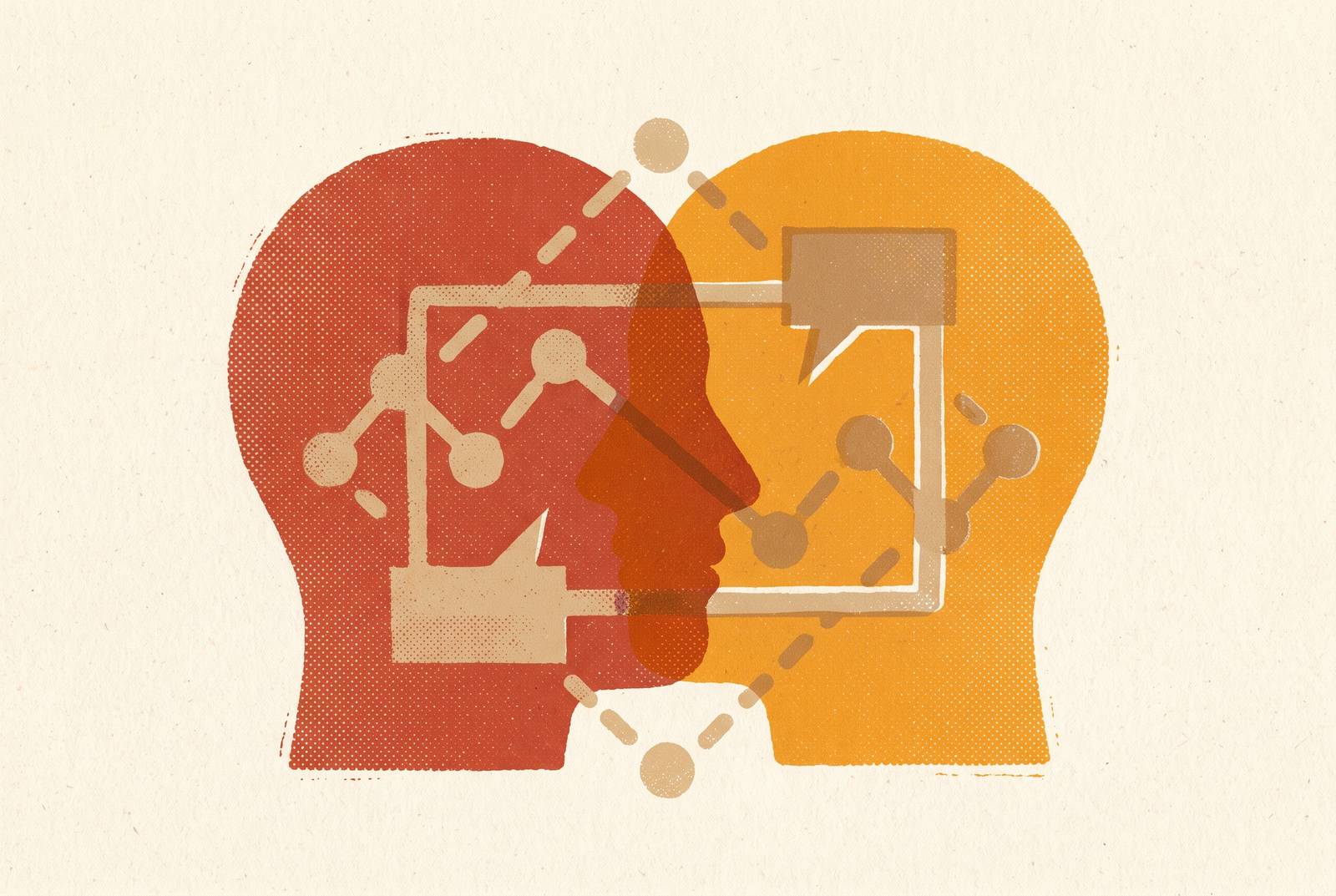
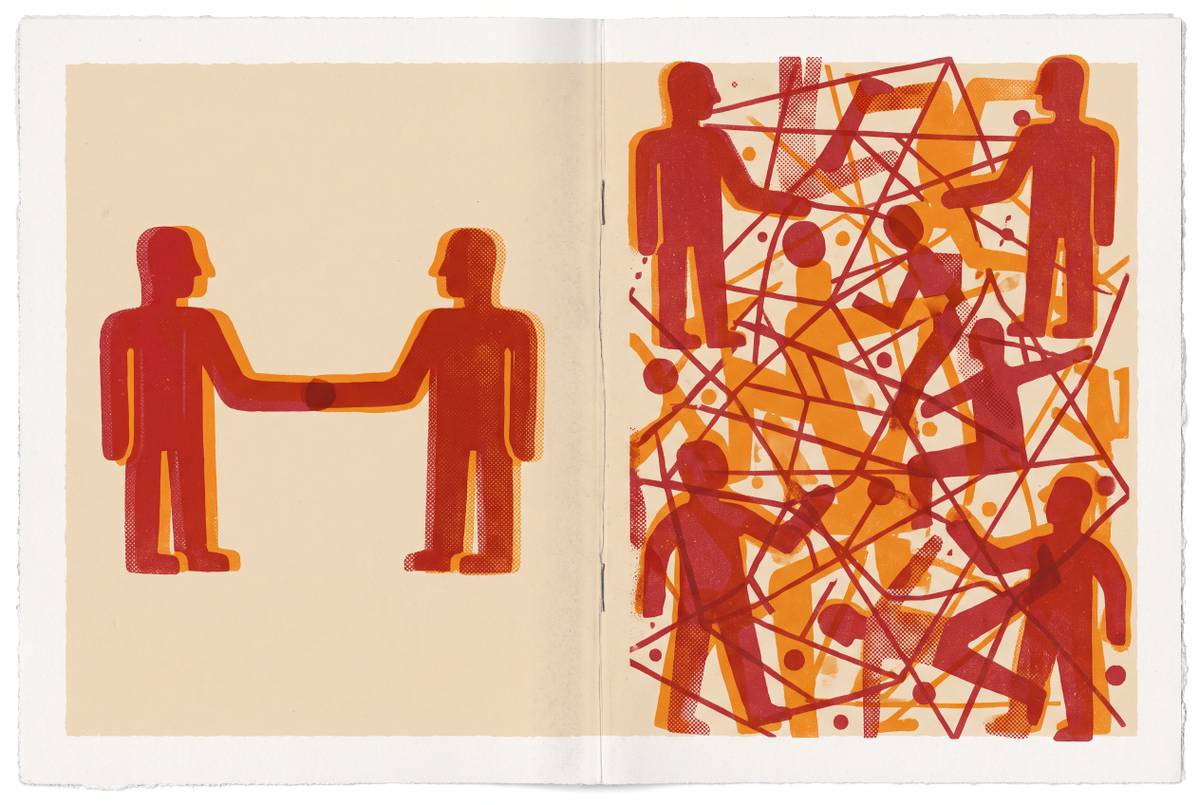
Argument is everywhere online, but very little of it does the job argument is supposed to do: test a belief against its strongest opposing case and leave both sides sharper. The internet produces volume without producing the kind of disagreement that sharpens thinking, and that scarcity is the actual problem this piece is about. Two distinct structures explain why people end up intellectually isolated, and they call for different fixes. An epistemic bubble is passive: a person's feed, friend group, or habits never bring the opposing view into view. An echo chamber is active: the opposing view does show up, but it arrives pre-discredited, dismissed as biased, stupid, or dishonest before it gets a fair hearing. Mistaking one for the other leads people to apply the wrong remedy, seeking out more outside content when their real problem is that they've already built a reflex for discounting it on arrival.
Echo chambers don't require a platform to build them. Someone convinced of their own moral correctness can wall themselves off from challenge without any algorithm doing the work, making this partly a habit of mind. Social identity sharpens the effect: once a political position becomes part of how a person understands who they are, a conflicting argument stops reading as an idea to weigh and starts reading as an insult to absorb. That defensive reflex is a large part of why disagreement on social media so rarely goes anywhere productive.
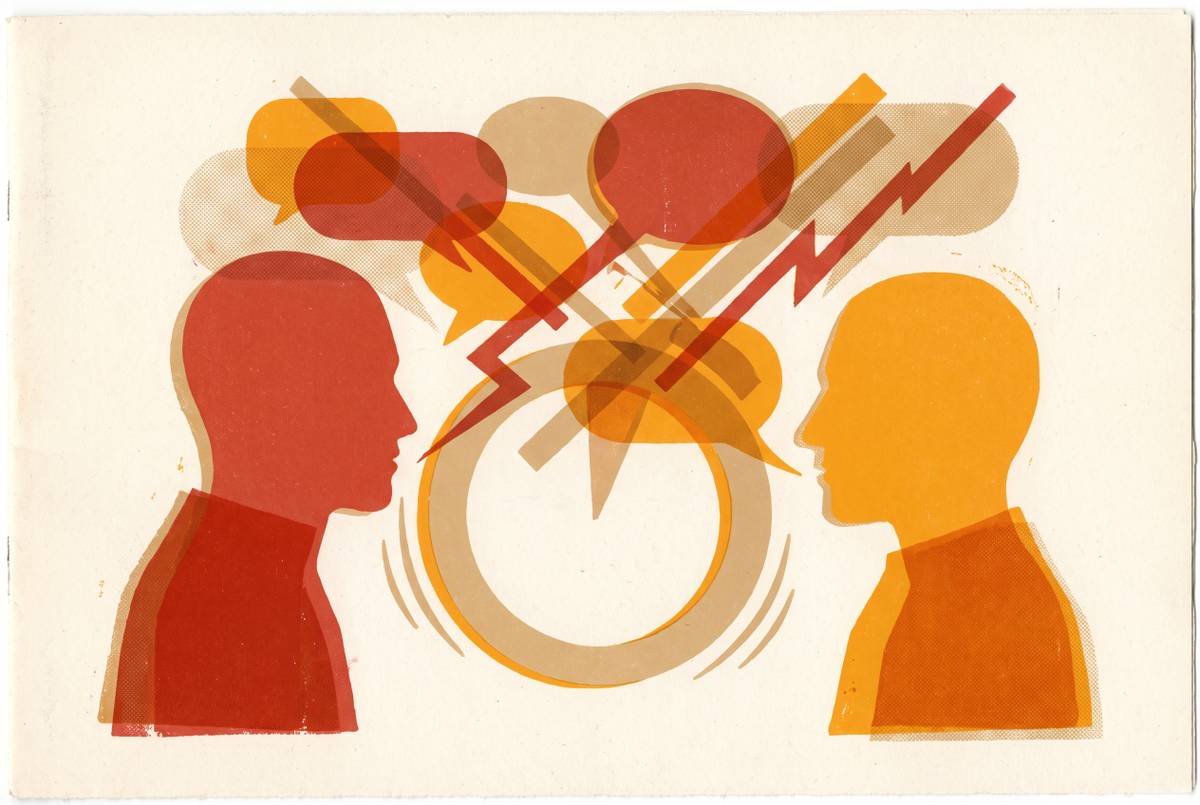
Comment-section pile-ons, and video titles like "I destroy MAGA mom on vaccines" or "Conservative philosopher owns feminist student," are built on gotcha questions, one-line zingers, and exchanges edited down to their most humiliating ten seconds for an audience that wants a winner declared. That format trains exactly the wrong instincts. It rewards the clip, not the case, and it does nothing to build the muscle of defending a position under real pressure or genuinely reconsidering one.
Why structured disagreement works when unstructured argument does not
The format a disagreement takes decides almost everything about whether it changes anyone's mind. That's the operative mechanism, and it explains why the rest of this piece is organized around finding structured environments rather than simply finding more opposing opinions to read.
Handing someone a headline that contradicts what they already believe tends to backfire. The more common response is defensive: people experience the discomfort of the contradiction and resolve it by digging in harder, not by updating. What does work is engagement that forces a person to slow down, actually examine the counterargument, weigh the evidence behind it, and put their own reasoning into words clear enough for someone else to follow. That slowing-down is what structure provides and unstructured arguing does not.
The clearest version of this is the switch-side exercise, where a participant is assigned to argue a position they don't hold. Actively building the best possible case for a view does something that passively hearing the view never does. It forces a person to understand the argument from inside its own logic. Defending a position you disagree with, out loud, in front of someone, is a fundamentally different cognitive task than reading an op-ed you dislike and moving on.
The obvious objection is that all of this is artificial, that real disagreements in real life don't come with two-minute turns, assigned sides, and a judge keeping score. That's true, and it's also the reason the format works. The constraint is not a compromise on realism but the feature that makes the exchange honest.
Passive exposure to the other side: starting with what you can absorb before you argue
Nobody has to walk straight into a judged debate to start building this skill. Listening to two credible people argue opposite sides of a real question, without having to respond yourself, is a reasonable first step, because it normalizes the basic experience of hearing a belief challenged without that challenge feeling like an attack.
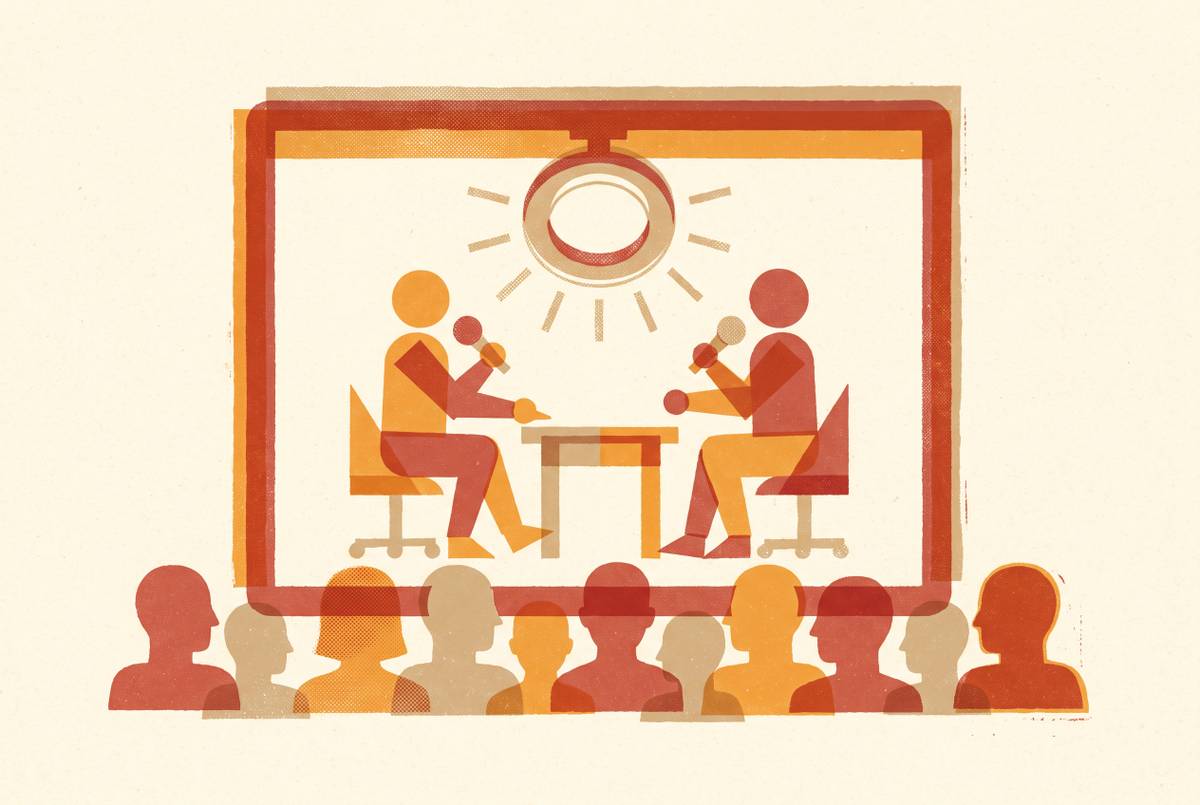
Open to Debate is built for exactly this. It's the nation's leading nonpartisan, nonprofit debate media platform, broadcasting weekly on NPR stations and available on NPR, YouTube, Substack, Spotify, and Apple Podcasts, with an archive stretching back to 2006 and a long record of bringing in credentialed voices on both sides of a question. Recent debates have taken on whether AI should have personhood rights, whether the four-day work week is a productivity gain or an economic risk, and whether resources should go toward terraforming Mars or toward addressing the climate crisis on Earth first. Listening to a few of these makes clear what skilled argument actually sounds like: how a sharp debater handles a point the listener finds obvious, where an opponent's logic holds together and where it cracks, and what a well-built rebuttal does that a one-line dunk never can.
That value comes with a real ceiling. Listening builds familiarity with how good arguments are constructed, but it doesn't build the ability to construct one under pressure. Knowing that a counterargument exists is a different skill from being able to produce it live, respond to a rebuttal in real time, and hold a position together when someone is actively pushing against it. Passive listening is a legitimate starting point. It's not a substitute for getting into the arena, and the rest of this piece is about how to do that.
Choosing a Topic for Genuine Disagreement
Before anyone can practice structured disagreement, they need a topic that actually permits it, and most people default to topics that make real engagement impossible. The best topics are ones where strong, honest arguments exist on both sides, not ones where a correct answer is already obvious to almost everyone, and not ones so wrapped up in personal identity that the first exchange collapses into defensiveness instead of reasoning.
A workable topic touches something with real stakes while still leaving room for more than one defensible position. The actual skill isn't hunting down some neutral, risk-free subject, it's building a structured container sturdy enough to hold disagreement on a subject that matters. That container has a specific shape: a precise question rather than a vague prompt, evidence both sides can point to, and criteria for judging the exchange that get set before anyone starts arguing. A good round asks each side to separate what it has actually observed from what it's assuming, to back claims with evidence that can be checked, to admit where it's uncertain, and to say in advance what kind of evidence would change its mind.
A handful of subjects fit this shape well right now: whether AI should have personhood rights, whether the four-day work week is a productivity gain or an economic risk, whether terraforming Mars should take priority over addressing Earth's climate crisis, whether digital minimalism is a privilege available only to some or a necessity for everyone, and whether voting should be mandatory. For students and other structured learners, policy-anchored clusters like social media censorship, AI in education, and universal basic income work especially well, because the evidence on each side is well-documented and the positions are defensible without collapsing into personal attack.
Some subjects should be avoided for this kind of practice entirely: anything wound so tightly into personal or group identity that a challenge reads as an attack on the person rather than the claim, anything where one side simply holds all the verifiable evidence and the other is arguing from assertion, and anything that is really a personal accusation dressed up as a policy question. The principle that should govern every topic choice is the same one that governs a good debate round: a precise question, evidence both sides can examine, and criteria for judgment agreed before the first argument is made. That principle is also what the structured platforms discussed next are built to enforce.
Finding live opponents: platforms where disagreement is the point, not a byproduct
Once a topic is chosen with that principle in mind, the next step is finding somewhere that disagreement is the explicit purpose of the space. A comment section lets disagreement happen. A debate platform is built around it, enforces a structure for it, and gives both sides equal time to make their case, which is what keeps the exchange honest instead of letting it dissolve into whoever posts fastest or loudest.
A few platforms currently enforce that kind of structure directly. Debategle matches a user with a stranger who holds the opposite view on a topic they chose, runs the exchange through structured debate phases with two-minute turns, has an AI evaluate the arguments once the round ends, and updates each participant's Elo rank after every match. Bantr runs a different format: two speakers argue the pro and con sides of a question while a live audience watches and votes in real time, and anyone in that audience can request to join the stage and take a side. Bantr Pro extends this with four-hour debate sessions, rooms for up to four debaters at once, unlimited room creation, and analytics on how each session went.
Whatever platform someone chooses, three features separate a real structured environment from a disguised comment section: equal speaking time for both sides, a judging mechanism with criteria published before the round starts, and a ranking system that makes every round count toward something. Without those three things, "debate" reverts to a contest of volume and confidence. The Elo ranking system, borrowed directly from chess, shows up across several of these platforms for a specific reason: it turns every single round into something that visibly moves a number, which gives a participant a concrete reason to keep coming back.
How AI judging works
The natural question about any AI-judged debate platform is whether a machine can actually judge an argument fairly. AI judging helps because a scoring rubric published before the round begins forces both sides to make their case to the argument itself, since there's no person to charm or intimidate into a favorable verdict, and both participants walk away with something specific to learn regardless of who won.
The mechanics are straightforward. A question gets posed, one side is assigned to argue for position A and the other for position B, and the two take turns making claims, asking each other questions, and challenging what the other side just said. At the end, an AI judge reviews the full exchange and returns a scored verdict along with a written explanation that cites specific things said during the round. That written explanation, tied to what was actually argued, is the core of why the format works.
The judging typically scores a few distinct dimensions: clarity, meaning whether an argument was free of jargon and ambiguity; relevance, meaning whether a claim actually addressed the topic or responded to the opponent's last point rather than drifting off it; evidence, meaning whether claims were backed by facts, examples, or a chain of logical reasoning rather than assertion; and persuasion, with each of these weighted differently depending on where in the round the exchange is happening.
What makes this trustworthy in practice comes down to a few concrete safeguards. The scoring rules are published before the round starts, not after, so neither participant can claim afterward that the criteria shifted to favor one side. The verdict itself cites specific moments in the exchange rather than delivering a general impression of who sounded more confident. A decision can be appealed to a human reviewer, making the AI's verdict a strong first read with recourse available. And the platform itself has no stake in who wins, so there's no incentive built into the system to tilt a verdict either way.
The strongest objection to this entire approach is that an AI judge can be gamed by fluency rather than truth: a confident and well-structured argument that happens to be wrong could outscore a hesitant argument that happens to be right. A 2025 study on AI-facilitated debate found that the format improved human judgment accuracy and confidence calibration by 4 to 10 percent compared to relying on a single advisor's consultancy, which suggests the benefits of the format hold up even with that risk factored in. The practical answer to the objection is that published rubrics and the human appeals process exist precisely to catch this failure mode, and practicing under this constraint has its own value: real human audiences are swayed by clarity and structure too, so learning to argue with clarity is a necessary part of learning to argue with truth. Some platforms go a step further and run a panel of three independent AI models rather than one, which cuts down the risk that any single model's particular blind spots or susceptibility to a polished-but-wrong argument end up deciding the outcome. A scored verdict with a specific written explanation gives a participant more to work with than any comment-section argument ever will, win or lose.
Building the habit: how to practice disagreement often enough that it changes how you argue
Finding one real opponent for one real debate is useful, but it's the repetition that actually builds the skill, in the same way a chess player improves by playing hundreds of rated games. Data from one speech and debate association backs this up directly: participants in speech and debate programs show an 87 percent increase in analytical skills, a gain built from rounds practiced repeatedly under real constraints rather than from a single well-prepared argument delivered once. Passive listening sets the expectation that disagreement is survivable. Choosing the right topic makes a real exchange possible. Structured platforms and scored verdicts make each round count. It compounds into actual skill only when repeated often enough to become a habit.